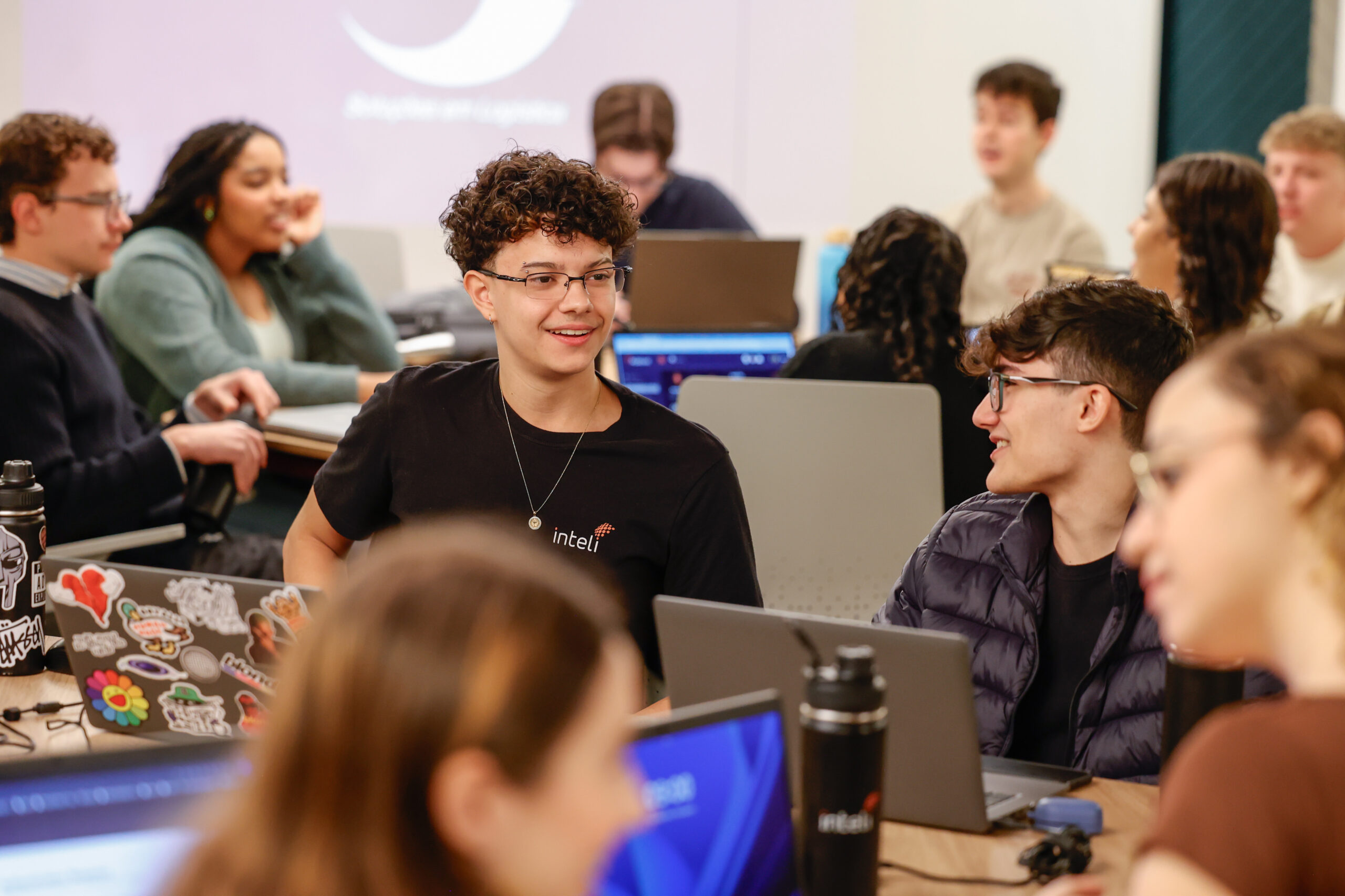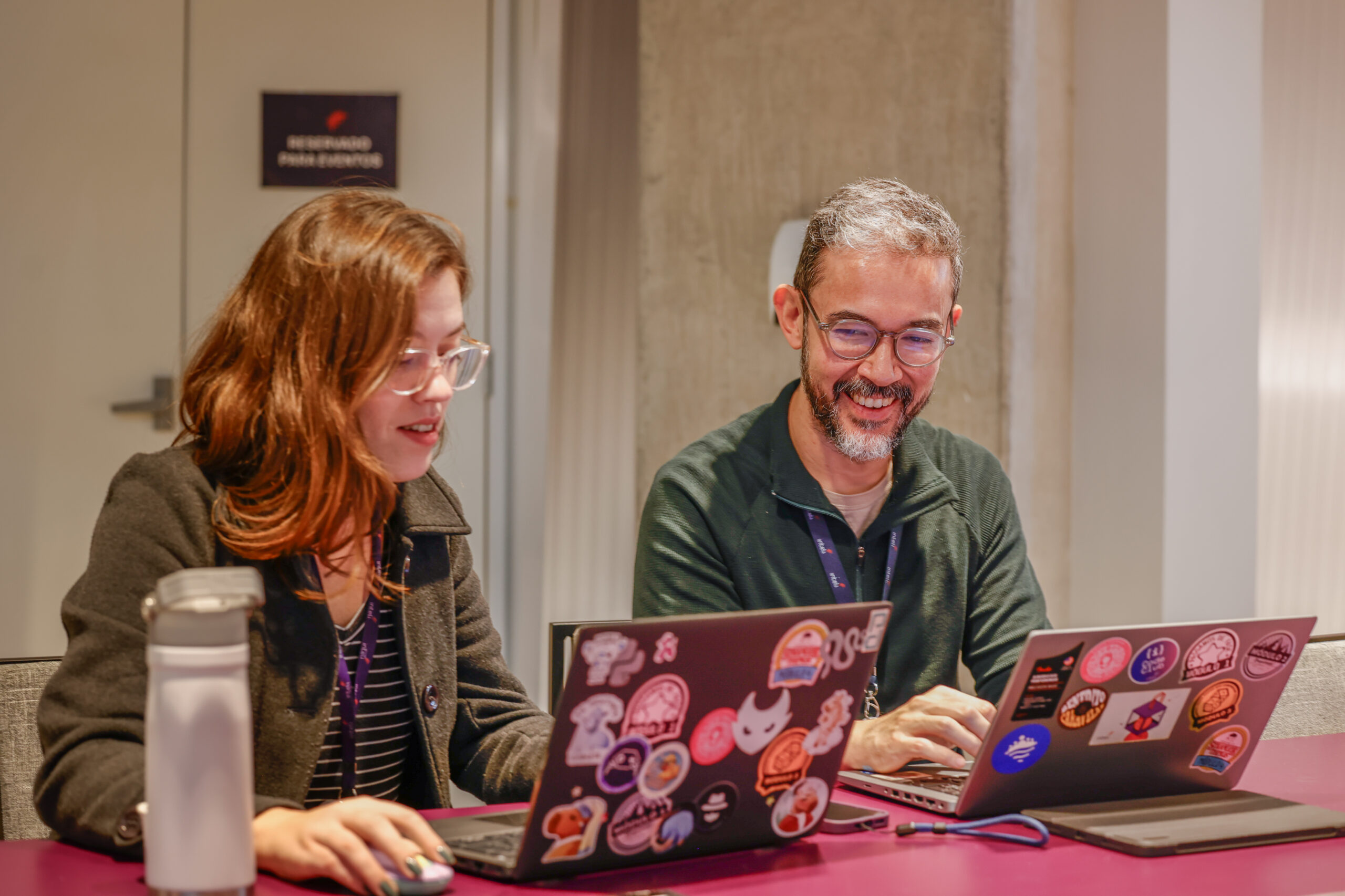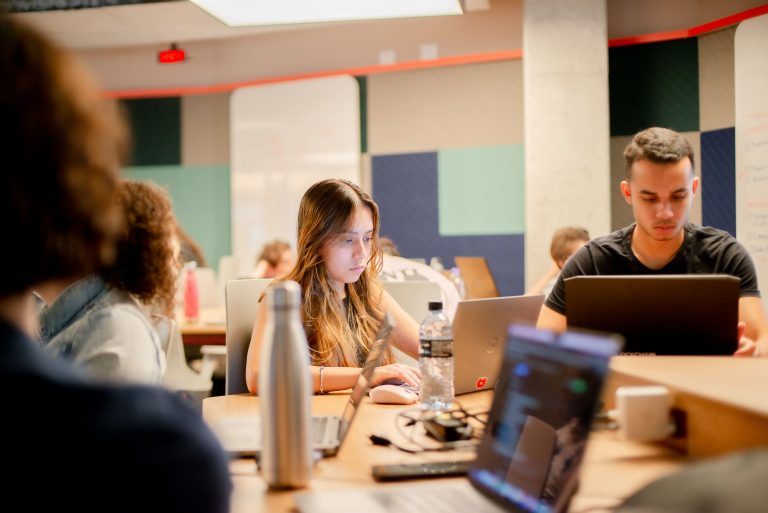

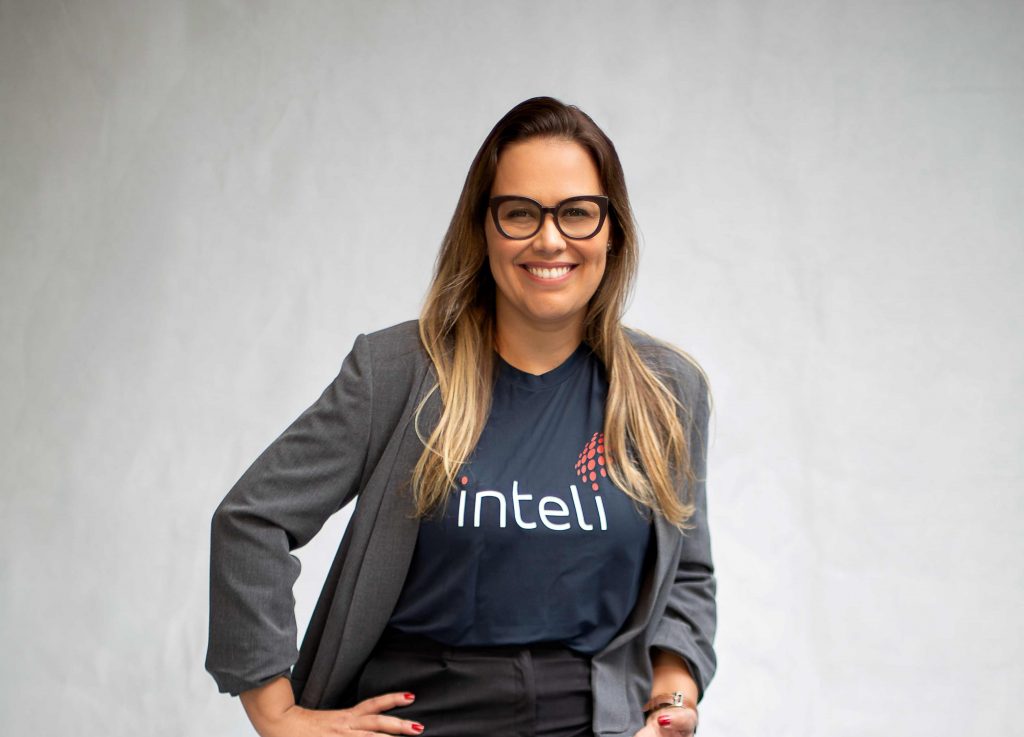
Every time I hear our students talking about their experience here, I remember why this project was born, and how it continues to be built every day, by many hands.
In the episode From Code to Business: Decoding Inteli, our ambassadors shared, with a beautiful naturalness, how they experience the project-based training model, how they find meaning in the curriculum, how they recognize themselves in the selection process, and, above all, how they see their own trajectory in a world that demands speed, autonomy, and purpose.
The most curious thing is to see that what they are telling us today was born from questions that moved us back then. It was by asking questions such as, what if we did things differently? What if the selection process looked at stories and not just grades? What if higher education started with real problems and not with a chapter in a book? that Inteli took shape.
See Inteli through their eyes
Listening to Vivian, Pablo, Amanda, José, Eduardo, Marcela, and Bernardo, each with their own accent, their own paths, and their own doubts, I see much of what we dreamed of back in the beginning:
- Students who learn by doing, and who understand that theory and practice do not compete with each other; they complement each other.
- Curious people, capable of fearlessly changing course when they find a new passion.
- A community that recognizes itself, where first-years talk to third-years, engineers learn from administrators, and everyone grows together.
- A vibrant campus, where every week is different from the last, because companies, challenges, leagues, and hackathons are part of the routine.
What struck me most about the episode was realizing that they understand, without anyone having to explain, that the training we provide here is, above all, a way of being in the world: collaborative, adaptable, responsible, and deeply connected to reality.
From dream to project, and from project to impact
When I agreed to lead the creation of Inteli, I knew that building something new would mean navigating uncertain territory. Building an innovative college in Brazil is inevitably an act of courage, but also of humility. As I wrote in the original text, the sum of the parts will always be greater than the individuals. And this has never been truer than when I see our students in action.
They are living proof that project-based learning works. That working with real problems changes the rules of learning. That confidence, autonomy, and responsibility can, and should, be part of undergraduate education.
And above all: that when we build a college with students, and not just for them, something extraordinary happens.