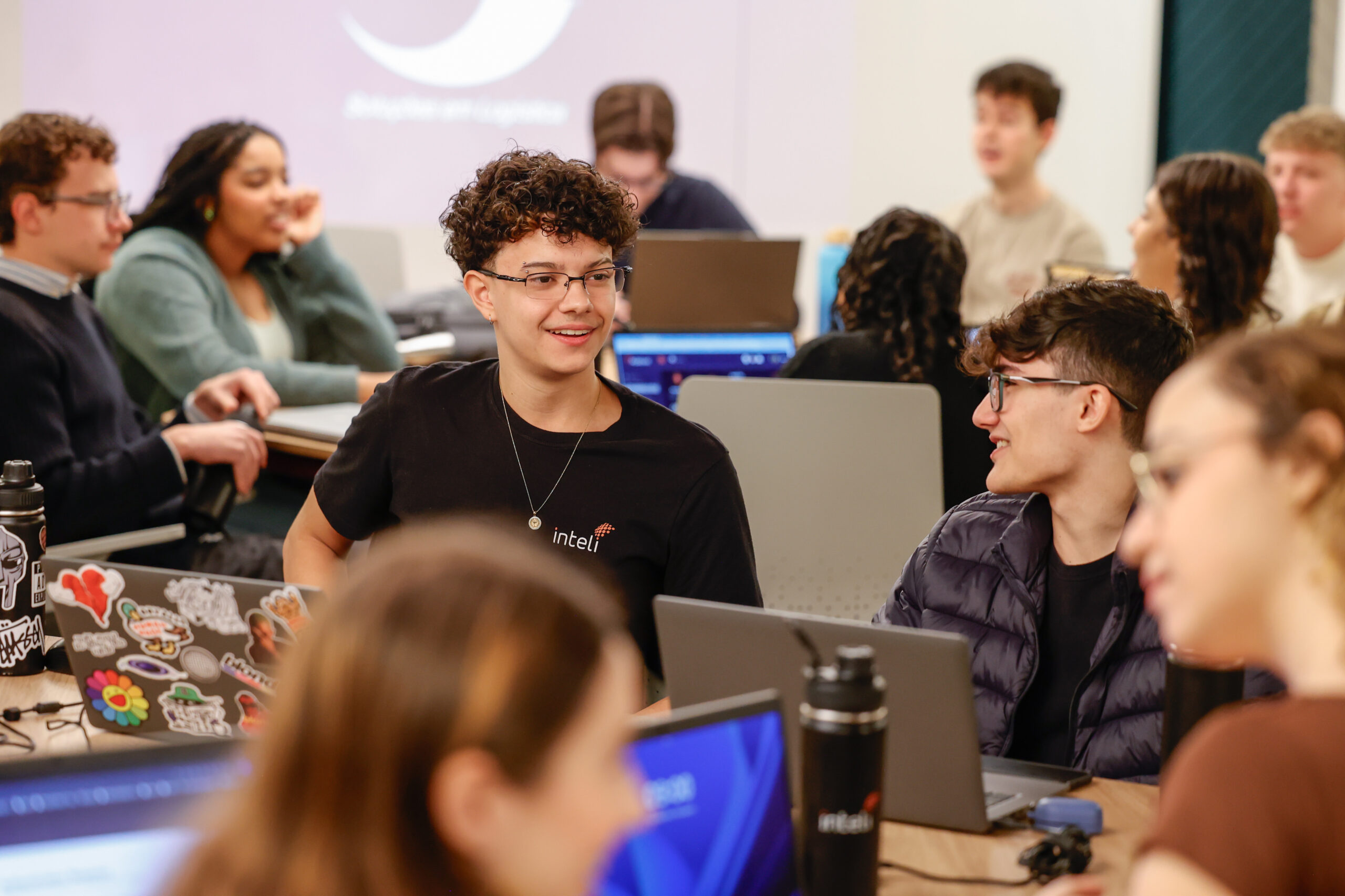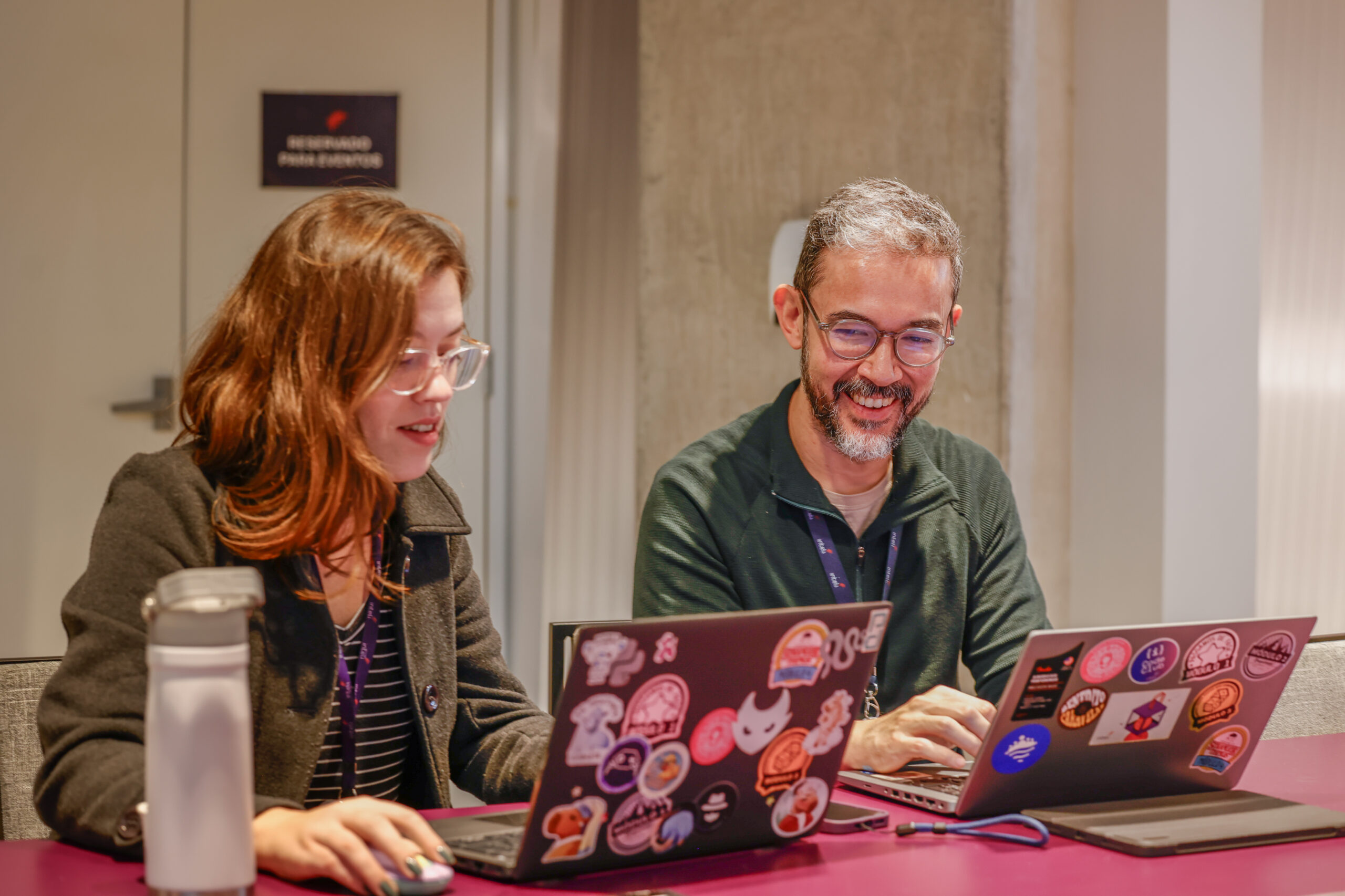

Two articles produced by our students and researchers were accepted at the IEEE International Symposium on Engineering Accreditation (ICACIT), one of the leading international events dedicated to accreditation and quality in STEM higher education in Latin America.
With over 20 years of experience, ICACIT brings together institutions that strive for academic excellence and develop research capable of transforming educational models. Being present in this space reinforces Inteli's commitment to pedagogical innovation, scientific rigor, and social impact.
The approved studies explore two fundamental themes for training technology leaders: self-assessment and development of social-emotional skills, and project-based learning for teaching Natural Language Processing.
Self-assessment and social-emotional skills in the first year of Computer Science
The article Self-Assessment and the Development of Socio-Emotional Competencies in First-Year Computing Students, written by Julia Stateri, Filipe Gonçalves, and Rajesh Rani, analyzes self-assessment practices in the first year of Inteli's Computing courses, investigating how this process contributes to the development of socio-emotional competencies, dimensions that are increasingly necessary in the global market and in innovation environments.

More than just an assessment tool, self-assessment is, for us, a true diagnosis of students' technical and socio-emotional skills. With this mapping in hand, we are able, in alignment with the teaching staff and coordination, to plan more precise strategies to support each student in overcoming their difficulties, whether technical or socio-emotional. It not only provides a general overview of the class, but also an individual portrait of the skills that each student perceives in themselves. This level of detail greatly enriches the relationship between guidance counselors and students.
Julia Stateri
PBL for teaching Natural Language Processing at undergraduate level
The second article, Project-Based Learning for Teaching Natural Language Processing in Undergraduate Computing, is the result of a study conducted by Thiago Goulart, an undergraduate research student, supervised by Prof. Henrique Paiva and co-supervised by Prof. Victor Hayashi. The research analyzes the module dedicated to Natural Language Processing and demonstrates how Project-Based Learning (PBL) drives deep learning in complex AI topics.
This work also symbolizes the spirit of institutional collaboration that guides Inteli: Thiago received a scholarship from UNIFESP to conduct his research, connecting two institutions committed to innovation in science and academic training.

Project-Based Learning (PBL) has a major impact on AI education, as it promotes critical thinking, autonomy, and the ability to apply complex concepts in real-world situations.
Henrique Paiva
Publishing in ICACIT means standing shoulder to shoulder with institutions that set standards for STEM education in Latin America. More than just external recognition, these articles confirm that Inteli is building a solid path in the production of knowledge about technology education, a path that is born from practice, finds scientific rigor, and returns to the classroom in the form of innovation.