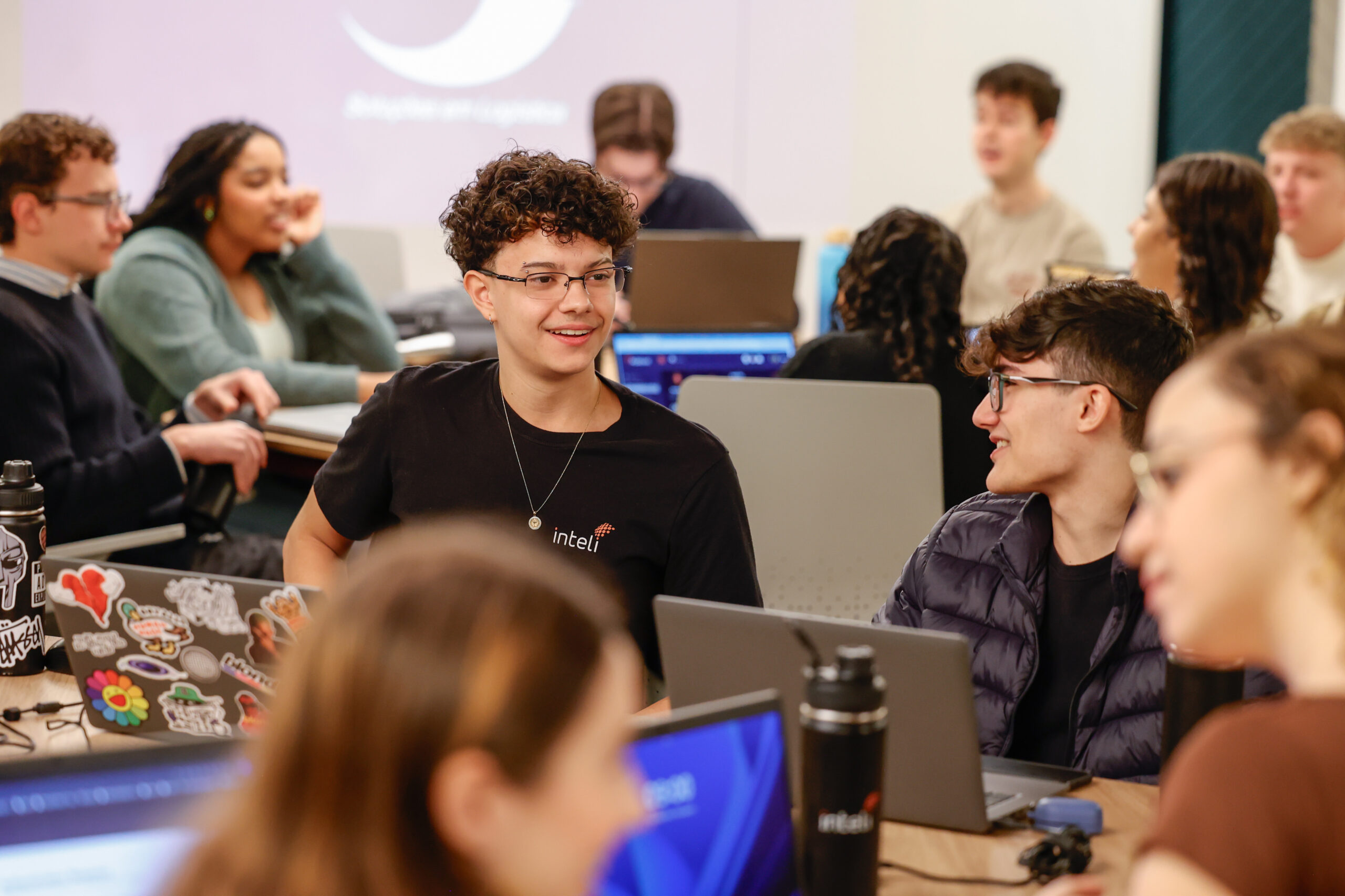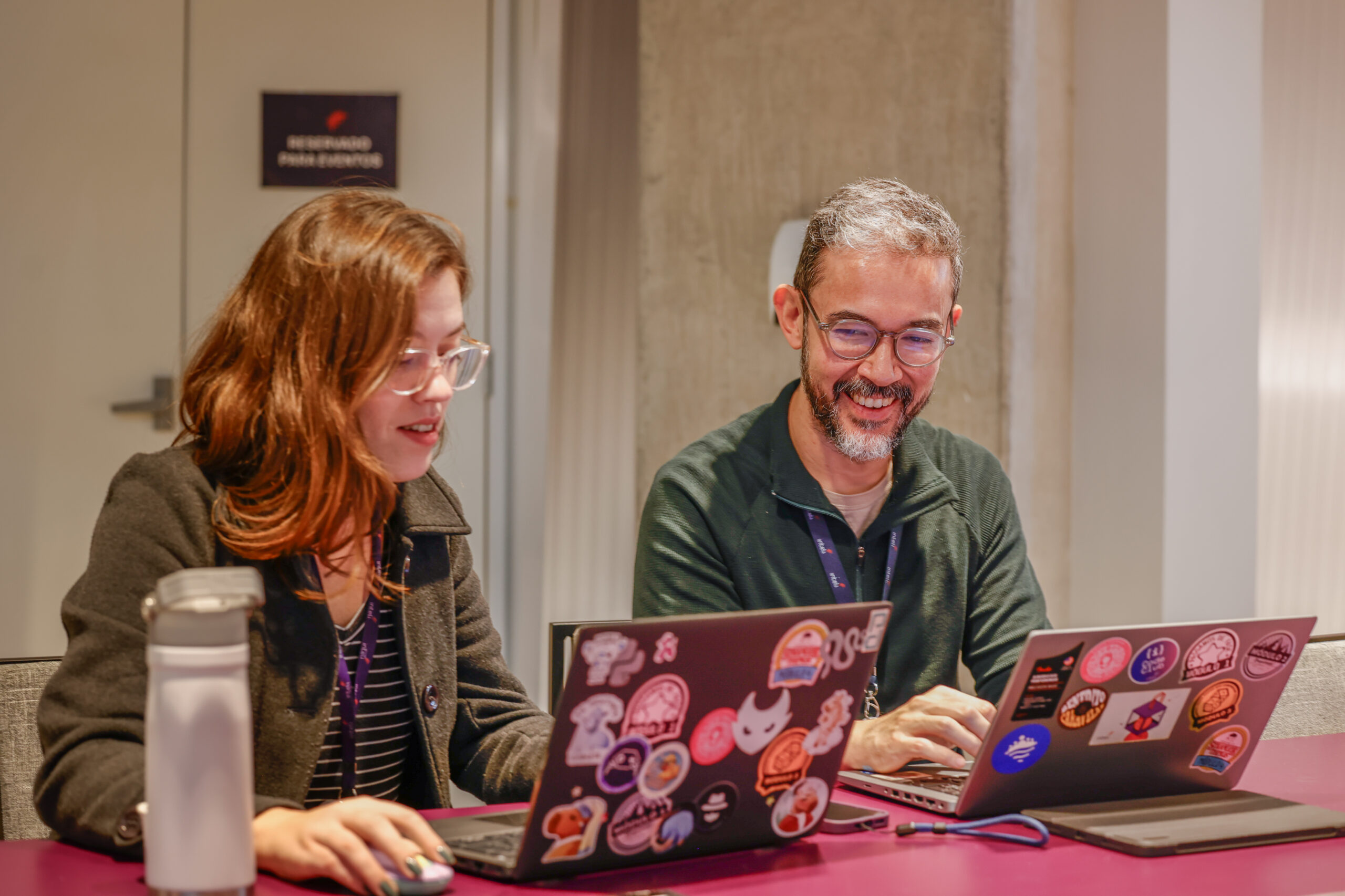

Watching our students complete their fourth year and take ownership of their projects, their choices, and their professional voice is a privilege. After three years of guided experimentation, they arrive at the final cycle prepared to exercise full authorship.
Final projects take on a whole new scale. They are more complex, more profound, and require decisions that can only be made by those who have matured technically and personally. External panels make this evident.
When I see them defending their solutions, explaining their approaches, and justifying their choices, I see the result of four years of deliberate practice: an education built at the intersection of theory, technology, and real-world problems.
I always say that at Inteli, "time multiplies." Just look at any record from the first week of class to see the huge leap between the student who arrives and the professional who graduates. In their fourth year, they take on responsibilities naturally, see problems in depth, and articulate science, business, and technology with clarity. It is a maturity that shows in their eyes, their speech, and their posture. And it is a deeply human maturity.
The tracks amplify this process. The choice between academic, corporate, or entrepreneurial paths represents more than a career decision: it is an exercise in responsible autonomy. Each track has been designed to allow students to build their career path with intention, but without losing rigor.
Along the way, they learn to seek answers, validate hypotheses, make methodological choices, and defend those choices before experts in the field. It is a maturation that comes from doing, not from abstract instruction.
Autonomy is one of the pillars of our teaching model. But autonomy is not synonymous with abandonment. It requires preparation, close monitoring, constant dialogue, and a real commitment to active learning. At Inteli, teachers are not transmitters of content; they are provocateurs, guides, someone who helps students transform doubts into method and intuition into knowledge.
And students, in turn, take responsibility for their own studies, organize their time, collaborate with the group, and make decisions that have a direct impact on the quality of their work. This process is not simple. It requires deconstruction, discipline, and, above all, commitment. But when it works (and it does!), the results are extraordinary.
The fourth year reminds us that educating means accompanying a process of becoming. Our graduates leave with solid technical skills, but also with something I consider even more valuable: attitude, ethics, collaboration, and the ability to continue learning consistently. This is what defines a professional who is prepared for the future. And this is what confirms that the path we chose from the beginning is the right one.