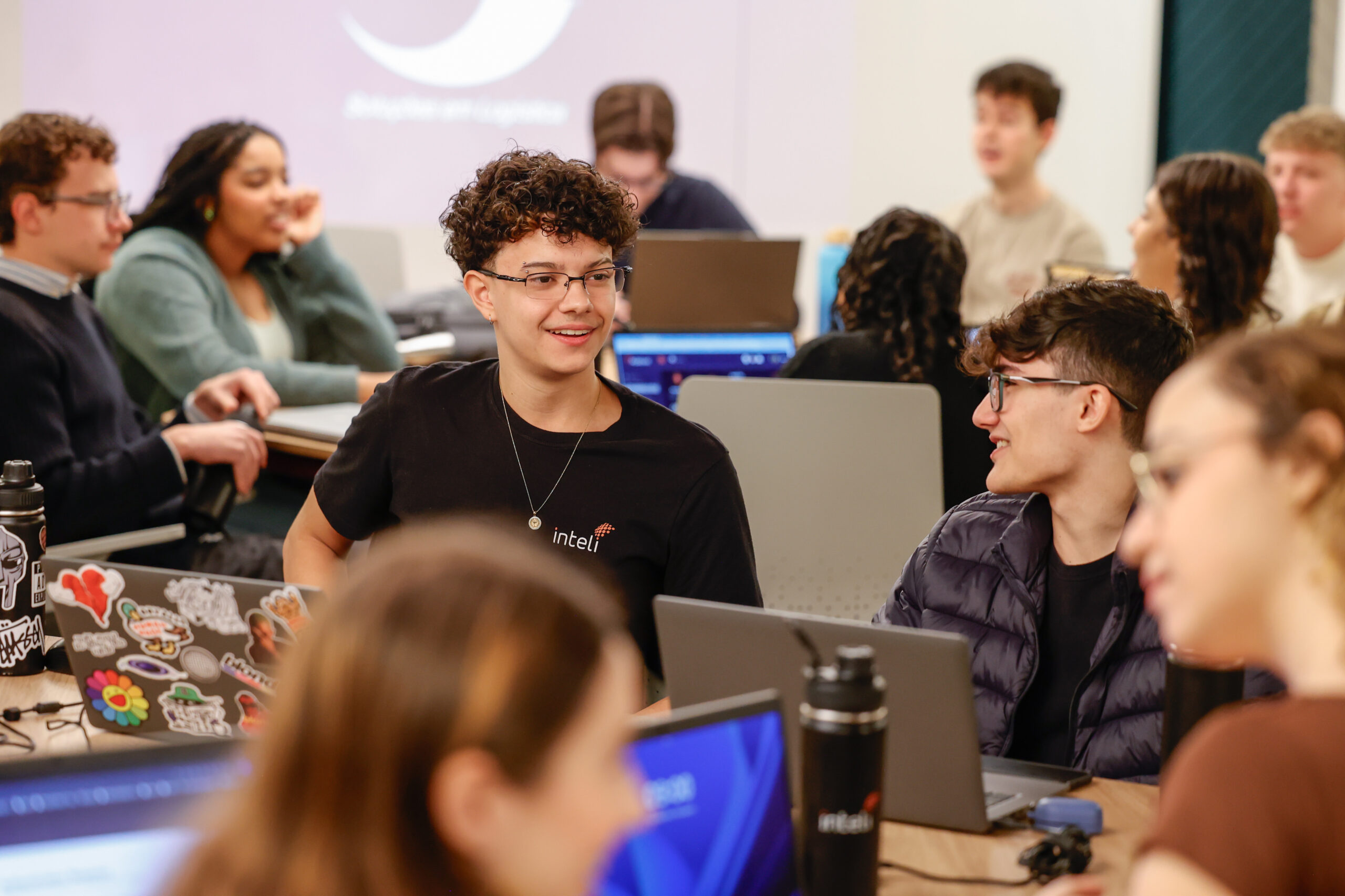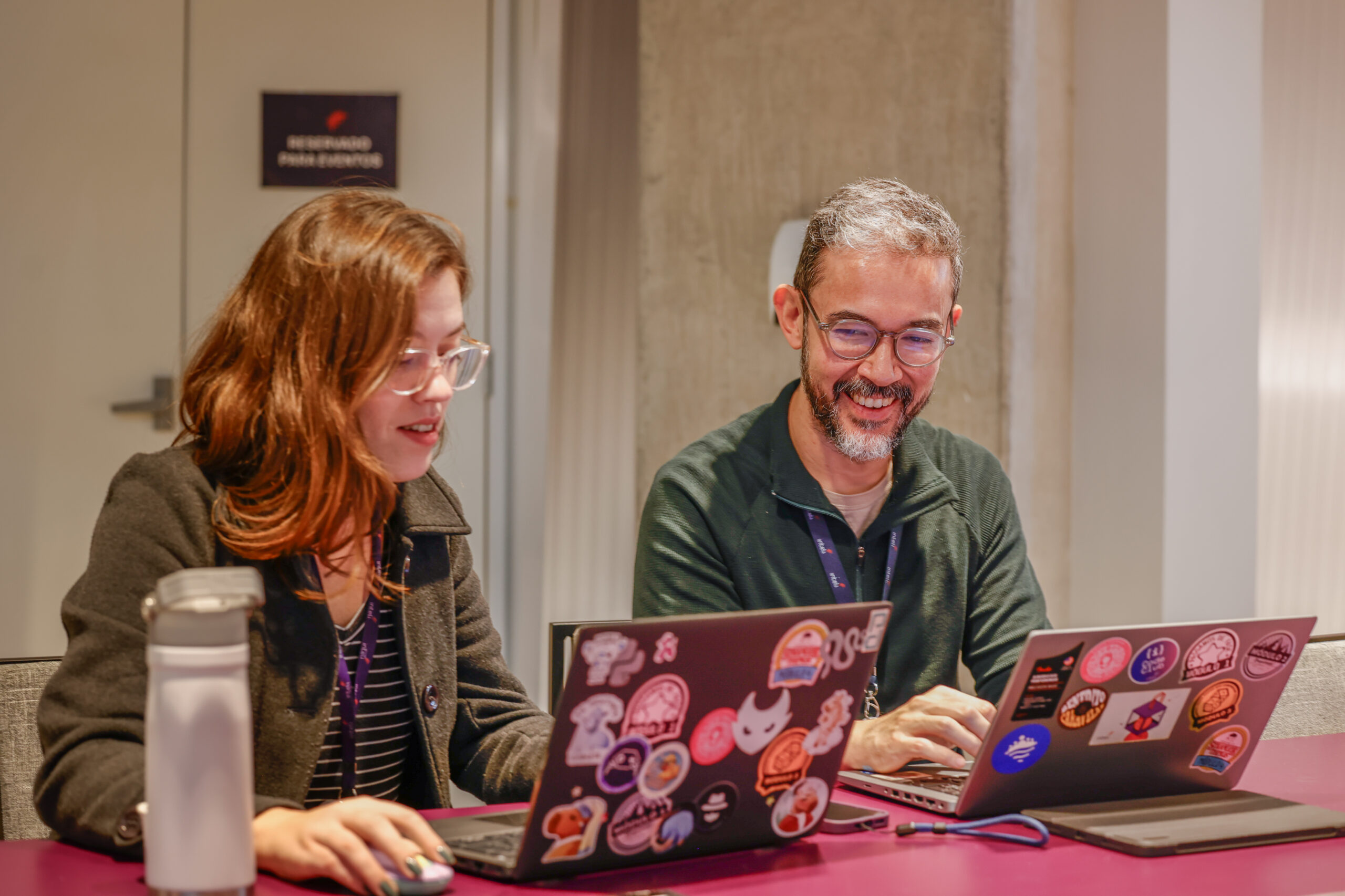

In Brazil, assistive technologies that support the learning of deaf people do exist, but they reach only a few. The high cost puts these tools out of reach for most of the schools and families that need them the most. This situation is troubling. And it was precisely this concern that motivated a group of students from Inteli to do something about it.
In 2024, under the guidance of Professor Bruna Mayer—who holds a master’s degree and is pursuing a Ph.D. in visual arts at USP and teaches UX and Design at Inteli—five first-year students decided they didn’t just want to study the problem. They wanted to solve it.
That’s how Sintoniza came to be.
A technical solution to an urgent problem.
The decision to focus the project on music was not arbitrary. The subject became mandatory in K-12 education in 2008, was established as a language within the Arts component in 2016, and has been part of the National Common Core Curriculum (BNCC) for elementary school since 2017. With this legal and pedagogical backing, the students’ main concern emerged:
If music is mandatory and essential for development, why do deaf students still have so few appropriate resources available to fully participate in these classes?
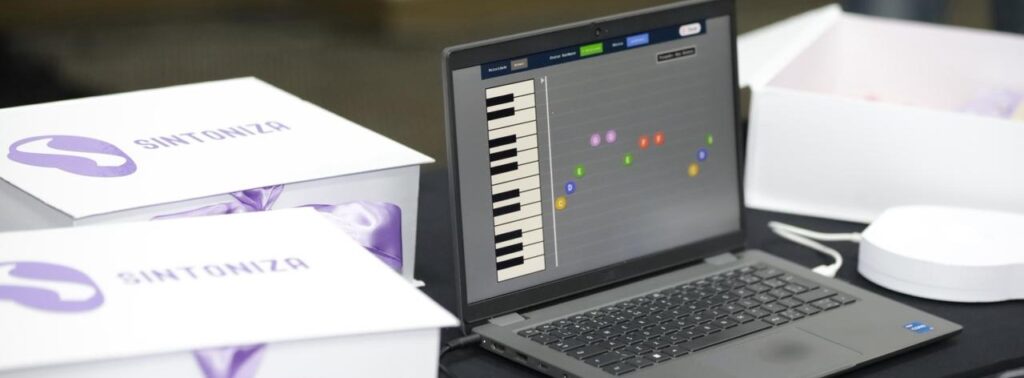
The team consisting of Nataly de Souza Cunha (Software Engineering), Pablo de Azevedo (Computer Engineering), Cecília Beatriz Melo Galvão (Computer Engineering), Lucas Periquito Costa (Computer Engineering), and Mariana de Paula Barbosa Souza (Information Systems) developed a device that translates musical content into tactile vibrations.
In practice, the teacher uploads the sheet music to software developed by the team. The software processes the content and sends it to a device connected to the laptop, which produces vibrations of varying intensities and durations. The result is a musical experience that can be felt through the hands and body, allowing deaf students to participate in music classes.
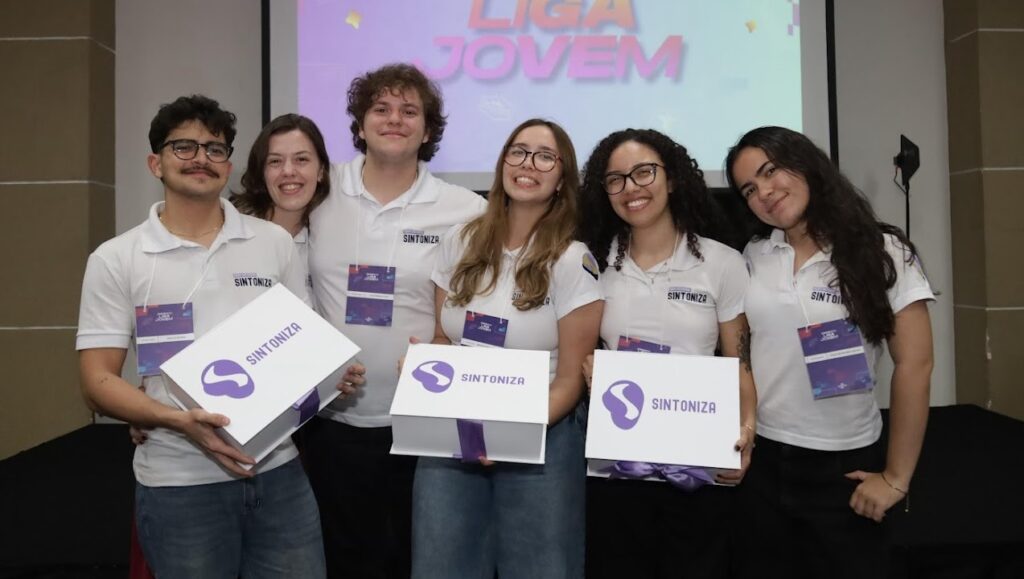
To arrive at this solution, the team drew inspiration from dynamic sound envelopes: curves that describe how a sound evolves over time and distinguish between timbres, such as those of a piano and a guitar. From there, they developed their own “vibration envelopes”—patterns capable of representing musical characteristics in a tactile way. Cost was the central criterion for every technical decision: the solution needed to be financially accessible so that it could reach public schools and the families that need it most.
It's almost like fuel.
As the project was taking shape, the group entered Sintoniza in the Liga Jovem Challenge, a national competition organized by Sebrae for students and teachers with initiatives focused on innovation and social impact.
On their first try, during their freshman year of college, they made it to the national finals. They didn’t win any prizes.
They could have stopped there. Instead, they used the experience as a diagnostic tool: what needed improvement? What wasn’t quite ready yet? The team turned the project into a research initiative, which was funded by Inteli, and for an entire year, they devoted themselves to delving deeper into the research.
In its second attempt, with over 60,000 entries from all over Brazil, Sintoniza took first place in the national finals, held in Belém, Pará, in 2025.
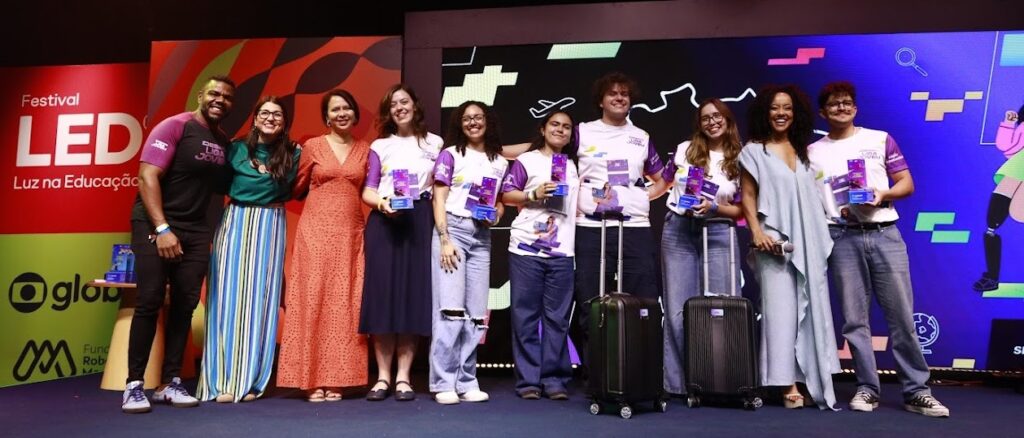
Pablo de Azevedo, one of the team members, summed up well what this journey meant:
“Last year, we entered the Youth League competition, but we didn’t even make it to the podium with that exact same project. But we were confident that we could transform the lives of deaf people through music, and transform the lives of neurodivergent people, so we kept at it for a whole year.”
The award was featured in the special episode of the LED Movement – Light in Education, a Globo initiative aimed at highlighting transformative projects in Brazilian education.
Barcelona
As part of the award, the team took part in the International Mission in Barcelona. The students attended the Mobile World Congress (MWC 2026), the world’s largest event for connectivity and technology, where they presented pitches for their project and watched demonstrations by leading companies in the industry.
They also attended 4YFN, an event dedicated to the startup ecosystem with the theme “Infinite AI,” and visited key players in the city’s innovation ecosystem, such as La Salle Technova, Norrsken, Distrito 22@, Tech Barcelona – Pier 01, and the Consulate General of Brazil.
What does Sintoniza reveal?
Identify a real-world problem. Develop a technically sophisticated solution. Get rejected and come back stronger. Make it to the national finals and represent Brazil in Barcelona.
All of this, and I'm still in my second year of college.
Sintoniza is an accessibility project. But it also reflects the way we educate at Inteli: with teachers who truly guide their students, students who don’t shy away from difficult challenges, and a method that turns a spirit of nonconformity into technology with real-world impact.
Follow the project: @sintoniza_br